More arguments over the use of ai in D&D worldbuilding - failure points, individualism, ableism, and self-reflection
It's a given that when someone asks if they should be using generative ai in their D&D worldbuilding, polarised arguments will happen. On one side are bitter arguments about outsourcing thinking, cognitive laziness, and environmental damage. On the other, laissez-faire arguments that boil down to - use whatever you want and have fun.
I, of course, am against use of ai in creative endeavours like this. For me, the creative journey - the sweat, blood and tears - is the really important part. It's where learning and self-reflection happens. It's where we fail and get up over and over. It's where we're tested and work out our own creative persona. And sometimes, a person fails and just gives up. It happens a lot. But that's also part of self-discovery. Ai shortcuts the failure points and makes the journey quicker, but it completely misses all the self-reflection, all the self-discovery, and yes, all of the fails that can result in learning and personal strength.
Most often, the argument for the use of ai in this way rests on the idea that as individuals living in a society that prioritises individual good over collective good, we should be free to choose whatever tools we want in order to produce an output. The output, in this case, is the product of creative labour. But focussing on the product completely misses the journey to get there. It becomes an argument about economy and efficiency and time instead: I lack the time due to my drudge work, therefore I use ai to help me get to a creative end point without all the sweat, blood, and tears that prior generations had to endure. In this view, time and toil is seen as something to be avoided rather than something to embrace. Why work harder, when we can work smarter and outsource some of the process and get to the goal more quickly and efficiently?
One other oft-cited argument for ai focusses on the case of being ableist - if someone has an executive dysfunction, for example, that makes it hard to organise their thoughts, why shouldn't they participate in the creative process through the use of ai? Anyone against this position must then be ableist, as they are denying people from entering the gate. It's a sensitive argument, as I doubt most people want to frame an argument against the use of ai in a way that hurts other people. And while there are fine uses for ai in many areas that can help generations of people - science research, for example - I'm not convinced that it won't simply become an easy crutch. Will it then result in cognitive atrophy for a lot of people? Maybe.
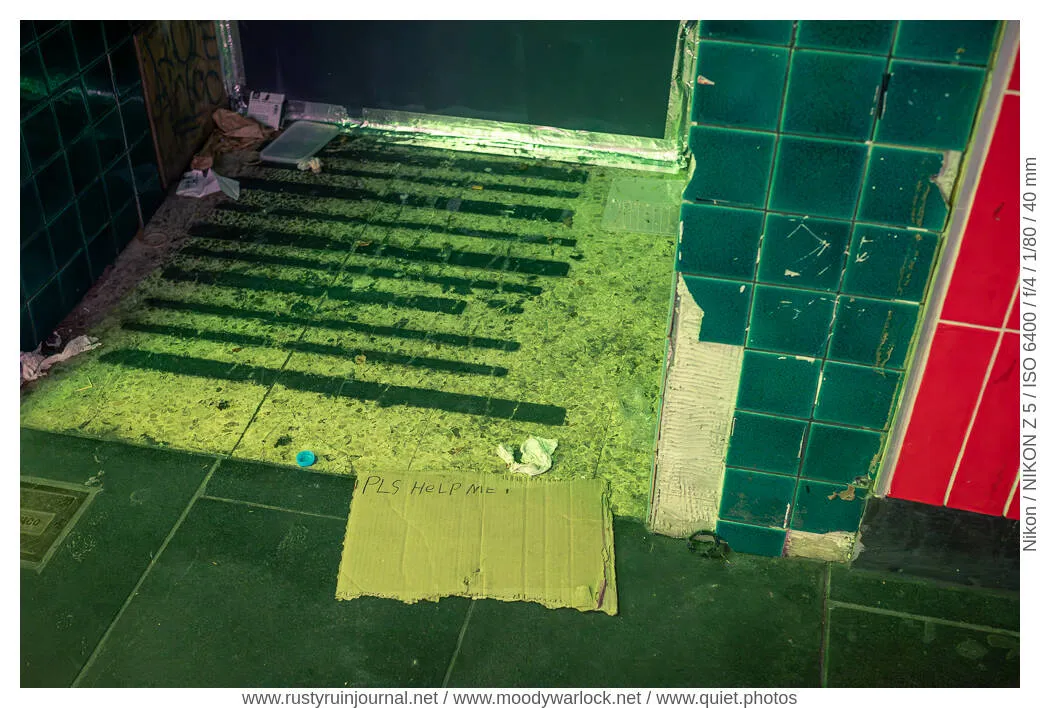
Should a person use ai to cover up a weakness in writing, for example, rather than work through it and work at improving? Should ai be seen as the great leveller, so that everyone can enter the gates? I'm not very good at a lot of things, and I view that as life happens. That's the universe being indifferent and everyone holding a different hand of cards. I can't feel comfortable with the idea that ai can help me appear better in areas where I struggle. I've spent years doing as many simple calculations in my head as I can because I suck at maths. That's one of my methods of improving a weak area. But working in the area of disability provides me a unique viewpoint, as I'm fully aware that ai can be used to allow people to communicate and have easier lives too. It's complex.
In the end, people will do as they will. Many of us live in societies that prize the individual above the group. We live in societies that prioritise economic output and efficiency over quiet self-reflection and participation in interests that are unintended for an audience. When we focus on the product and economic value, we lose sight of simply being. We mistake output for happiness and the saturated digital feed for truthful feedback.
Email me about this post. Subscribe to my blog via RSS feed. Find me on Mastodon and Bluesky.